
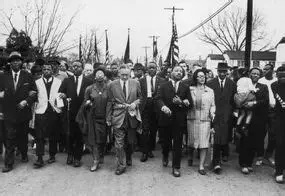
In the gentle cadence of our modern lives in the quiet privileges we often mistake for permanence reside the unseen labors of countless souls who, through serenity and steadfastness, redefined the essence of humanity. These peacemakers, visionaries, and moral sentinels devoted their lives to the arduous pursuit of justice and reconciliation. Their unwavering fortitude, radiant empathy, and indomitable faith in human goodness have become the invisible architecture of our freedom. Their legacies pulse through time, guiding us toward a civilization tempered by compassion rather than conquest.
The Living Spirit of Tranquility
Progress rarely roars it whispers. Beneath the tumult of politics and ideology lies something far more transcendent: the quiet conviction of those who believe that conciliation is stronger than conflict, and that comprehension outlasts coercion. These luminaries remind us that peace is not an idle dream but a discipline an act of moral realism carried out through patience, dignity, and courage.
Every act of non-violence becomes a luminous defiance against despair. Whether in the poetry of protest, the rigor of reform, or the eloquence of empathy, their struggle proclaims that peace is not the absence of adversity, but the mastery of it with grace. The true metric of civilization, then, is not the sharpness of its swords but the tenderness of its conscience.
The Price of Conviction
Human rights, those inalienable endowments we so eloquently declare, remain far from universal reality. For every nation that codifies freedom, countless others still silence it. Thus, the global struggle endures not in treaties or tribunals alone, but in the hearts of ordinary individuals who refuse to accept indignity as destiny.
Many such custodians of conscience have sacrificed everything. More than 1,700 environmental defenders have been slain in the past decade guardians of the Earth extinguished for their audacity to speak against exploitation. Their courage joins an eternal pantheon of martyrs: Jesus of Nazareth, whose gospel of mercy outlived the empires that sought to silence it; Mahatma Gandhi, whose ascetic strength dismantled imperial pretension; Martin Luther King Jr., whose eloquence became a requiem and a rallying cry for equality; Yitzhak Rabin, whose assassination tore through the fragile membrane of Middle Eastern hope; and John Lennon, whose pacifist idealism still serenades the collective imagination.
Each of them confronted the perennial adversary of progress: fear. Fear of change, fear of parity, fear of relinquishing unearned supremacy. Violence, at its core, is the language of insecurity — the defense mechanism of minds unprepared for transformation.
The Anatomy of Fear
Why do the prophets of peace so often fall before their time? The answer, perhaps, lies in humanity’s paradoxical nature: we yearn for harmony but resist the humility it demands. Those who champion reconciliation destabilize the architecture of oppression. Peace is subversive; it dethrones arrogance and disarms power. Those who profit from discord understand instinctively that harmony erodes their dominion.
And yet, history offers abundant evidence that while violence may still bodies, it cannot suffocate visions. The assassin’s hand can silence a heartbeat, but never the harmony that heart has set in motion. Ideas seeded in sacrifice have a strange and sacred immortality; they germinate in conscience and bloom across centuries. What dies in the moment resurrects as momentum, as moral inheritance for generations yet unborn.
Choosing the Path Forward
We stand today as inheritors of that sacred bequest. The mantle of peace has been passed from the hands of martyrs to the hearts of the living. To sustain their legacy requires not mere admiration, but emulation. Peace cannot survive as sentiment; it must be practiced as principle. It demands empathy in discourse, equity in governance, and the audacity to see the “other” not as adversary but reflection.
To choose peace is to resist the seduction of cynicism. It is the quiet heroism of forgiveness, the intellectual labor of understanding, and the moral artistry of coexistence. It calls upon us to unlearn prejudice, to dismantle inherited animosities, and to see progress as a shared pilgrimage rather than a solitary ascent.
As another year approaches on history’s horizon, may we resolve not only to remember the fallen architects of peace but to continue their unfinished symphony. Let us cultivate the courage to be gentle, the strength to be just, and the foresight to be kind.
May ours be an age where reason and reverence walk hand in hand where love is not weakness but wisdom, not an ideal but an imperative. And may the eternal flame of peace, kindled by those who dared to dream in defiance of violence, forever illuminate our collective path toward a nobler humanity.